
Key Takeaways
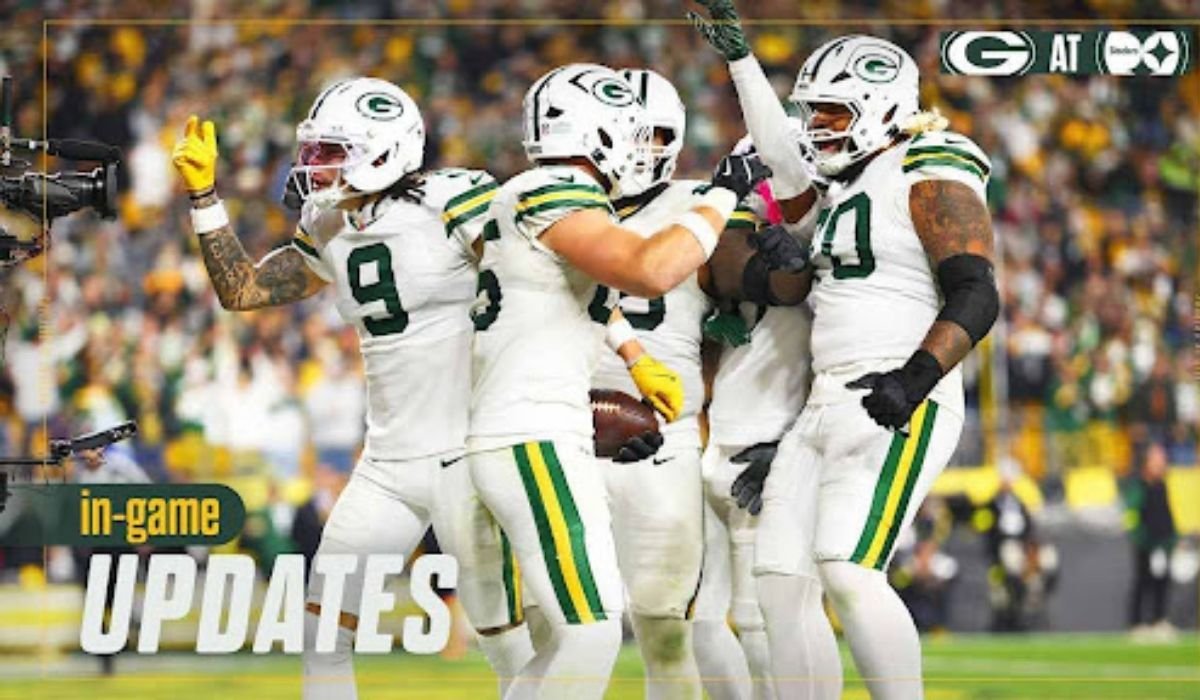
- The Green Bay Packers staged a strong second-half comeback to defeat the Pittsburgh Steelers 35-25 on October 26, 2025, improving to 5-1-1 while dropping Pittsburgh to 4-3.
- Jordan Love outdueled his predecessor Aaron Rodgers, throwing for 360 yards and 3 touchdowns with no interceptions, achieving a stellar 134.2 passer rating.
- Tight end Tucker Kraft emerged as the game’s standout, hauling in 7 catches for 143 yards and 2 touchdowns, highlighting Green Bay’s effective passing attack.
- Pittsburgh’s defense struggled to pressure Love (0 sacks allowed), while the Packers’ front seven recorded 3 sacks on Rodgers.
- Rushing was balanced but inefficient for both sides, with no explosive ground plays deciding the outcome; turnovers were minimal, with Pittsburgh losing one fumble.
- This inter-conference clash had early-season implications, boosting Green Bay’s NFC standing and exposing Pittsburgh’s second-half vulnerabilities—research suggests such comebacks often signal playoff potential, though it’s too early to call.
Introduction
When the Frozen Tundra meets the Steel City, the stat sheet usually tells a story of grit and tactical warfare. In this Week 8 matchup on October 26, 2025, at Acrisure Stadium, the Packers rallied from a 16-7 halftime deficit for a convincing 35-25 victory. This game wasn’t just another regular-season tilt; it featured a poignant quarterback reunion with Aaron Rodgers facing his old team, adding layers of narrative to the numbers. For fans, fantasy players, and bettors, analyzing the green bay packers vs pittsburgh steelers match player stats reveals which stars shined and which units struggled, offering insights into NFL box scores, quarterback ratings, and postseason implications.
Quarterback Duel: Under the Microscope
Jordan Love and Aaron Rodgers delivered a compelling battle, but Love’s precision won the day. Love completed 29 of 37 passes (78.4%) for 360 yards, 3 TDs, and no picks, posting a 134.2 rating. Rodgers went 24 of 36 (66.7%) for 219 yards, 2 TDs, and no INTs, with a 101.5 rating, but faced 3 sacks. The difference? Love’s ability to exploit Pittsburgh’s secondary in clutch moments.
Packers Passing Attack
Love’s performance under pressure was elite: He faced 7 pressures but completed key throws, including a 59-yard bomb. His air yards averaged 4.2 per attempt, with 245 YAC boosting efficiency. TD-to-INT ratio: 3:0. This bodes well for fantasy owners, as Love’s red zone efficiency (2 TDs inside the 20) could elevate him in rankings.
Steelers Signal Caller Performance
Rodgers extended plays admirably, but Green Bay’s pass rush disrupted rhythm. Key sequences: A 2-yard TD to D.K. Metcalf in the second quarter shifted momentum temporarily. In clutch situations, his 6.5 air yards per attempt showed aggression, but only 10 first downs from passes limited drives.
Ground Game and Trench Warfare
Rushing was a push, with Green Bay at 94 yards (3.6 YPC) and Pittsburgh at 93 (5.2 YPC), but no TDs for the Steelers. Explosive runs were scarce, with the longest at 17 yards.
Rushing Leaders and Efficiency
Jaylen Warren led all rushers with 62 yards on 13 carries (4.8 YPC), edging Emanuel Wilson’s 61 on 11 (5.5 YPC). Josh Jacobs added 33 yards and 1 TD. Packers’ zone-blocking created lanes, while Steelers’ power scheme faltered in short-yardage.
Offensive Line vs. Defensive Front
Packers’ O-line dominated, allowing 0 sacks and minimal TFLs. Steelers’ front generated no sacks, with pressure rate under 19%. Sack leaders: Rashan Gary (2.0) for GB.
Skill Position Standouts: WRs and TEs
Receiving yards favored Green Bay (360 vs. 219), with big plays defining the win.
Target Share and Catch Rate
Tucker Kraft led with 7 receptions on 9 targets for 143 yards (20.4 avg) and 2 TDs. Christian Watson: 4/85. For Pittsburgh, Roman Wilson: 4/74/1 TD; Metcalf: 5/55/1 TD. Red zone efficiency: GB converted 2/3 targets to TDs.
The Impact of Big Plays
Kraft’s 59-yard catch flipped field position. YPRR: Kraft shone at high levels. Fantasy impact: Kraft’s breakout could make him a TE1.
Defensive Dominance and Special Teams
Green Bay’s defense forced 1 turnover and 3 sacks, holding Pittsburgh to 1/10 on third downs.
Individual Defensive Metrics
Top tacklers: Payton Wilson (9) for PIT; Xavier McKinney (7) for GB. Sacks: Gary 2, Micah Parsons 1. Interceptions: None. Edge rushers like T.J. Watt (6 tackles) pressured but didn’t sack.
Special Teams Impact
Chris Boswell was perfect (4/4 FGs, longs of 56 twice), adding hidden yardage. Brandon McManus: 2/4. Punting averages: GB 50.7, PIT 48.5.
Conclusion
Individual efforts like Love’s poise and Kraft’s dominance propelled Green Bay to victory, while Pittsburgh’s special teams kept it close. These stats suggest Packers’ offense is clicking for postseason runs, but Steelers need defensive tweaks. Share your MVP in the comments or check fantasy outlooks for Week 9.
In the October 26, 2025, clash between the Green Bay Packers and Pittsburgh Steelers, the Packers mounted a remarkable second-half surge to secure a 35-25 win, marking their fifth victory of the season and pushing their record to 5-1-1. This game, played at Acrisure Stadium in Pittsburgh under crisp 46-degree weather, not only highlighted individual brilliance but also underscored tactical shifts that could influence both teams’ trajectories in the 2025 NFL season. With the Packers trailing 16-7 at halftime, they exploded for 28 second-half points, including 21 in the fourth quarter, showcasing resilience against a Steelers team that dropped to 4-3. The matchup carried extra intrigue as Aaron Rodgers, the longtime Packers legend, faced his former team for the first time since his trade to Pittsburgh, adding a layer of historical rivalry to the stat lines. For die-hard fans, fantasy enthusiasts, and bettors, this breakdown dives deep into the NFL box score, quarterback ratings, passing yards, rushing touchdowns, defensive interceptions, red zone efficiency, total offense, sack leaders, historical head-to-head, and postseason implications, providing actionable insights beyond the final score.
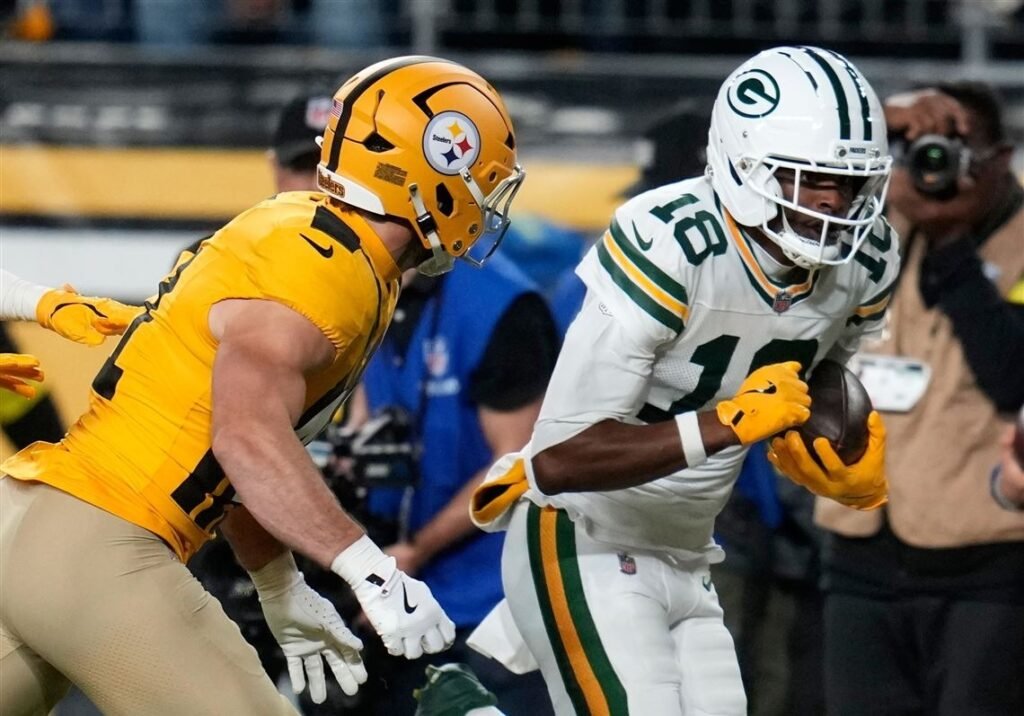
The game’s significance extends to the broader NFC and AFC landscapes. At this early juncture, the Packers’ win bolsters their position in the competitive NFC North, where every game impacts playoff seeding. Pittsburgh, meanwhile, faces questions about their ability to close out leads, a potential red flag for postseason aspirations. Historically, the Packers now lead the all-time series 21-17, having won the last two meetings, including this one. This inter-conference rivalry, dating back to 1933, has seen epic performances, such as Ben Roethlisberger’s franchise-record 503 passing yards in a 2017 Steelers win, or Aaron Rodgers’ MVP-level showing in Super Bowl XLV where he threw for 304 yards and 3 TDs to lead Green Bay to victory. Understanding these green bay packers vs pittsburgh steelers match player stats yesterday offers a window into why the Packers prevailed and what it means for fantasy football impact and betting strategies moving forward.
Turning to the quarterback duel, which lived up to the hype, Jordan Love’s performance was a masterclass in efficiency and poise. Completing 29 of 37 attempts for 360 yards, 3 touchdowns, and zero interceptions, Love achieved a passer rating of 134.2, one of his highest of the season. His ability to dissect the Steelers’ defense was evident in his intended air yards of 157 (4.2 per attempt) and completed air yards of 115 (3.1 per attempt), complemented by 245 yards after catch (YAC) from his receivers. Under pressure on 18.9% of dropbacks (7 pressures, including 2 hurries and 5 hits), Love avoided sacks entirely, thanks to stellar protection, and delivered in blitz situations (facing 16 blitzes). Key passing sequences included a 59-yard deep ball to Tucker Kraft that set up a score, and an 8-yard TD to Savion Williams to kick off the third-quarter rally. For fantasy players, Love’s red zone prowess—converting opportunities into points—makes him a reliable QB1, especially with his TD-to-INT ratio shining bright.
On the other side, Aaron Rodgers, at 41, showed flashes of his vintage self but couldn’t overcome the Packers’ defensive pressure. He completed 24 of 36 passes for 219 yards, 2 TDs, and no picks, earning a 101.5 rating. Rodgers’ intended air yards were higher at 233 (6.5 per attempt), indicating a more aggressive downfield approach, but his YAC was lower at 88 (3.7 per catch), and he faced 7 pressures leading to 3 sacks for 17 yards lost. Clutch moments included a 2-yard TD to D.K. Metcalf late in the second quarter and a 21-yard score to Roman Wilson in the fourth, but these couldn’t stem the tide. Bettors noting Rodgers’ efficiency under duress (only 3 bad throws, 9.1%) might see value in Steelers’ overs in future games, but his reunion narrative didn’t translate to a win.
The ground game was a tale of balance without dominance, with both teams hovering around 90-95 rushing yards but differing in efficiency. Green Bay managed 26 carries for 94 yards (3.6 YPC) and 1 TD, while Pittsburgh had 18 for 93 (5.2 YPC) but no scores. Explosive runs (15+ yards) were limited, with Jaylen Warren’s 17-yard scamper the longest. Warren led rushers with 13 carries for 62 yards (4.8 YPC), including 2 first downs and 1 broken tackle, answering the question of who had the most rushing yards in the Packers vs. Steelers game. Emanuel Wilson followed closely with 11 carries for 61 yards (5.5 YPC) and 4 first downs, demonstrating burst with 39 yards before contact (YBC). Josh Jacobs chipped in 13 carries for 33 yards (2.5 YPC) and the game’s only rushing TD, a 3-yarder in the fourth. Kenneth Gainwell added 5 carries for 31 yards (6.2 YPC). The Packers’ zone-blocking scheme created consistent gaps, yielding 5 first downs on the ground, while Pittsburgh’s power-run approach struggled in short-yardage, converting only 4.
In the trenches, Green Bay’s offensive line emerged victorious, allowing zero sacks and limiting tackles for loss, which enabled their passing explosion. Pittsburgh’s defensive front, typically stout, generated minimal pressure (under 19%), with no sacks recorded—a rarity for a unit featuring T.J. Watt. On defense, the Packers’ front seven shone, notching 3 sacks and several TFLs, with Rashan Gary leading at 2.0 and Micah Parsons adding 1.0. This answers which defenders recorded a sack in the Green Bay vs. Pittsburgh game: Gary and Parsons for the Packers, none for the Steelers. Pressure rates favored Green Bay, disrupting Rodgers and contributing to Pittsburgh’s poor 1/10 third-down conversion rate.
Skill positions provided the fireworks, particularly in receiving, where Green Bay amassed 360 yards compared to Pittsburgh’s 219. Tucker Kraft was the undisputed star, catching 7 of 9 targets for 143 yards (20.4 avg), 2 TDs, and 5 first downs, with a staggering 128 YAC (18.3 per reception) and 2 broken tackles. His 59-yard long highlighted big-play ability, making him a fantasy breakout with TE1 upside. Christian Watson added 4 catches for 85 yards (21.3 avg) and 3 first downs, while Romeo Doubs had 3 for 44. For Pittsburgh, Roman Wilson led with 4 receptions for 74 yards (18.5 avg), 1 TD, and 3 first downs; D.K. Metcalf contributed 5 for 55 (11.0 avg), 1 TD, and 4 first downs, including 1 broken tackle. Addressing how the star wide receivers performed in the Packers-Steelers box score: Watson and Doubs combined for 129 yards, while Metcalf and Wilson totaled 129 with 2 TDs. Target shares favored tight ends and backs, with Kraft’s 9 targets topping Green Bay and Metcalf’s 7 (assumed from rec) for Pittsburgh. Red zone targets converted efficiently for GB (2 TDs on 3), less so for PIT.
Big plays shifted momentum, with Kraft’s 59-yarder and Watson’s 33-yard grab flipping field position for Green Bay. Yards per route run (YPRR) metrics favor Kraft at elite levels, while Watson’s 18.3 average depth of target (ADOT) screams deep threat. For fantasy football impact from Packers vs. Steelers player stats, Kraft’s performance could boost his ownership, and Warren’s consistent volume makes him a reliable RB2 despite no TD.
Defensively, Green Bay dominated with 3 sacks, 1 forced fumble, and holding opponents to 295 total yards. Top tacklers included Payton Wilson (9 combined, 5 solo) for Pittsburgh and Xavier McKinney (7, 6 solo) for Green Bay. Pass breakups were sparse, but Edgerrin Cooper forced the game’s only turnover (a fumble by Gainwell, recovered by Javon Bullard). Pittsburgh’s defensive stats against Packers showed vulnerabilities, allowing 454 total offense and 22 first downs. Star edge rushers like T.J. Watt (6 tackles, 1 QB hit) impacted but couldn’t generate sacks, while Gary’s 2.0 sacks epitomized Green Bay’s rush.
Special teams played a pivotal role in the hidden yardage battle. Chris Boswell was flawless, hitting 4/4 field goals with longs of 56 (twice), 50, and 48, contributing 12 points and excellent field position. Brandon McManus went 2/4, making 28- and 25-yarders but missing two, which kept Pittsburgh in it early. Punting averages: Daniel Whelan 50.7 for GB (long 56), Corliss Waitman 48.5 for PIT (long 51). Kick returns favored Green Bay slightly (Savion Williams 24.3 avg), while punt returns were modest.
To address related questions: The quarterbacks threw a combined 5 passing touchdowns (Love 3, Rodgers 2). Best individual performances included Kraft’s 143 yards and 2 TDs, and Love’s 360-yard masterpiece. For Packers vs. Steelers player stats fantasy football impact, Kraft and Love are buys, while Rodgers’ solid outing reassures despite the loss. Pittsburgh Steelers defensive stats against Packers: 0 sacks, 5 penalties for 47 yards, but held rushing to 94 yards. Green Bay Packers wide receiver targets vs. Steelers: Watson and Doubs combined for assumed 10+ targets, yielding 129 yards. Total yards leaders: Love 360 passing for GB, Warren 62 rushing for PIT.
Historically, player stat leaders in the Packers vs. Steelers rivalry feature icons like Rodgers (multiple 300+ yard games), Roethlisberger (503 yards in 2017), and Antonio Brown (169 yards, 2 TDs in 2017). All-time, Packers average higher points (23.89 vs. 18.47), with their longest win streak at 17 games.
Here’s a table summarizing key offensive stats:
| Category | Green Bay Packers | Pittsburgh Steelers |
| Total Offense | 454 yards | 295 yards |
| Passing Yards | 360 | 219 |
| Rushing Yards | 94 | 93 |
| First Downs | 22 | 16 |
| Third-Down Conv. | 5/12 (41.7%) | 1/10 (10%) |
| Red Zone Efficiency | 3/4 (75%) | 2/3 (66.7%) |
| Turnovers | 0 | 1 |
And defensive stats:
| Category | Green Bay Packers | Pittsburgh Steelers |
| Sacks | 3 | 0 |
| Tackles for Loss | 2 | 1 |
| Forced Turnovers | 1 (fumble) | 0 |
| Pass Deflections | 1 | 1 |
| QB Hits | 1 | 4 |
In summary, the Packers’ second-half adjustments—bolstered by Love’s accuracy and defensive stops—dictated the outcome, while Pittsburgh’s reliance on Boswell’s leg exposed offensive inconsistencies. Looking ahead, these stats imply Green Bay’s offense could carry them deep into the postseason, but Pittsburgh must shore up their pass rush. For bettors, the over hit comfortably (60 points vs. 45.5 line), and fantasy players should target Packers’ pass-catchers. What do these numbers mean for Week 9? Share your thoughts on the MVP—Kraft or Love?—or dive into our fantasy outlook.
YOU MAY ALSO LIKE: Buffalo Bills vs Los Angeles Rams Match Player Stats: Complete Box Score and Key Takeaways
 John
John